Theodore Roosevelt's Captiva Island Visits and Conservation Legacy
Last Updated: October 29, 2026
Former President Theodore "Teddy" Roosevelt left a lasting mark on Captiva Island and the surrounding waters of Pine Island Sound. His enthusiasm for wildlife, adventurous spirit and commitment to conservation helped shape the protection of natural habitats throughout the United States, including Southwest Florida.
Today, Roosevelt Channel, the waterway along Captiva's eastern shoreline, preserves his connection to the island. His 1917 expedition to hunt giant manta rays, then commonly called "devil fish," remains one of the most unusual chapters in Captiva's history.
Theodore Roosevelt's 1917 Visit to Captiva Island
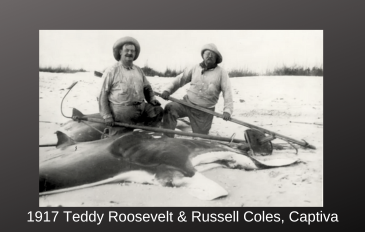
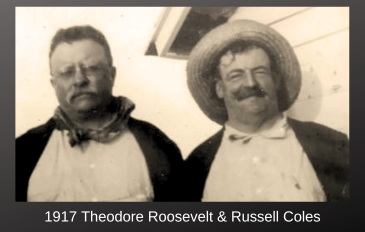
In the spring of 1917, former President Theodore Roosevelt traveled to Southwest Florida to join naturalist and shark hunter Russell J. Coles on an expedition in the waters surrounding Captiva Island.
Roosevelt was 58 years old and had already endured extraordinary adventures, including an expedition into the Brazilian Amazon that severely affected his health.
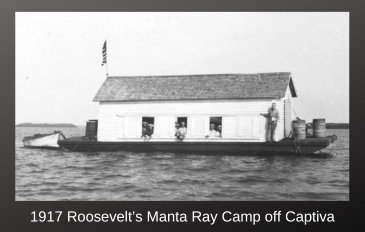
According to the Captiva Island Historical Society, Roosevelt traveled by train to Punta Gorda and then continued by steamboat to Captiva. During his visit, he stayed aboard a floating barge anchored on the sound side of the island.
Roosevelt and Coles pursued giant manta rays, which were then widely misunderstood and portrayed as dangerous sea creatures. Today, we recognize manta rays as graceful, plankton-feeding marine animals.
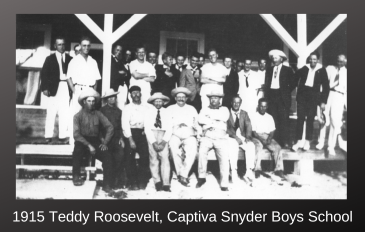
Historical accounts also describe Roosevelt visiting students at the Snyder School for Boys, which spent part of the year on Captiva.
Russell J. Coles and the Devil Fish Expedition
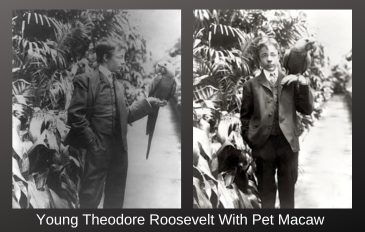
Roosevelt's fascination with the natural world began in childhood. Despite suffering from severe asthma, he developed a lifelong enthusiasm for outdoor exploration, wildlife observation and hunting.
After reading Russell J. Coles' accounts of hunting giant manta rays, Roosevelt became determined to experience the adventure himself.
The expedition reflected the attitudes of its era, when large marine animals were often regarded as dangerous creatures or sporting trophies rather than species deserving protection.
Roosevelt's enthusiasm for hunting may seem contradictory to modern conservation values. Yet he belonged to a generation of naturalists who combined wildlife observation, scientific curiosity and hunting with growing concerns about habitat destruction and species conservation.
His Captiva expedition illustrates this complicated relationship between America's early conservation movement and changing attitudes toward wildlife.
As a child Teddy suffered from extreme asthma and found that strenuous exercise helped his health. He embraced a rugged persona and loved exploring nature. His intense interest in animals at a very young age was obvious. He even created a makeshift museum of natural history with the animals he preserved after catching them. Wikipedia refers to Roosevelt as a true conservationist and naturalist. Today's conservationists might find this alarming since he loved to hunt and harpoon sharks and manta rays. After reading the notorious Russell Coles vivid account of hunting and killing the elusive "Devil Fish" which we now know as the harmless plankton-eating graceful Manta Ray, Roosevelt wrote: “The one thing I most desire to do is to harpoon a devil-fish, and I am pleased down to the ground, that everything is to be subordinated to that one consideration—until I get my harpoon into one.”
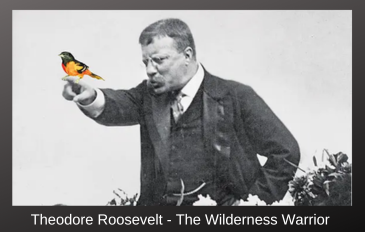
Teddy's passion for nature lead to a nationwide conservation effort that led to the protection of our natural ecosystems for future generations to enjoy. Roosevelt signed an executive order making Pelican Island on Florida's east coast the first bird sanctuary in the United States. It was a refuge for brown pelicans, a species threatened by extinction. His passion for nature led him to all areas across the United States in search of areas that needed protection from human greed, exploitation and development.
Roosevelt preserved 230 million acres which included 5 national parks, 55 national wildlife refuges for birds 9 of which were in Florida, and 150 national forests. He also created the U.S. Forest Service. When he visited Pine Island Sound in 1908, he created the Pine Island National Wildlife Refuge to protect birds from hunters killing egrets, herons and pelicans for their feathers and plumes that adorned many garments at the time.
Why Is Roosevelt Channel Named After Theodore Roosevelt?
Roosevelt Channel is the sheltered waterway along the eastern side of Captiva Island, between Captiva and Buck Key.
The channel was named in honor of Theodore Roosevelt and his association with the island's surrounding waters.
His 1917 visit helped establish a historical connection that remains visible on maps of Captiva today.
For boaters, anglers and residents, Roosevelt Channel is a reminder that Captiva's waterways have attracted explorers, fishermen and naturalists for generations.
Theodore Roosevelt and the Protection of Pine Island Sound
Roosevelt's most significant contribution to Southwest Florida was not his fishing expedition, but his earlier role in protecting the region's bird populations.
On September 15, 1908, while serving as president, Roosevelt signed Executive Order 939 establishing the Pine Island National Wildlife Refuge.
The original protection included Bird Island and Middle Island, two small islands in Pine Island Sound that provided important habitat for nesting and roosting birds.
During the late nineteenth and early twentieth centuries, egrets, herons and other birds were heavily hunted for feathers used in fashionable hats and clothing.
The refuge helped protect these vulnerable bird populations and their nesting grounds.
Today, Pine Island National Wildlife Refuge remains part of the Southwest Florida Gulf Coast National Wildlife Refuge Complex, helping preserve important coastal habitats.
Theodore Roosevelt: America's Conservation President
Theodore Roosevelt is widely remembered as America's Conservation President.
During his presidency from 1901 to 1909, he expanded federal protection of forests, wildlife habitats and natural landmarks on an unprecedented scale.
In 1903, Roosevelt established Pelican Island in Florida as the nation's first federal bird reservation, laying the foundation for the National Wildlife Refuge System.
His administration also established national forests, national parks, wildlife refuges and national monuments, protecting vast areas for future generations.
Roosevelt believed that America's natural resources should be managed responsibly rather than exhausted through uncontrolled exploitation.
Although his personal passion for hunting reflected the customs of his time, his conservation policies helped establish a lasting framework for protecting wildlife and natural landscapes.
From Theodore Roosevelt to the Ding Darling Wildlife Refuge
The conservation legacy Roosevelt helped establish continued on Sanibel Island through the work of another influential conservationist, Jay Norwood "Ding" Darling.
Darling, a nationally recognized political cartoonist and wildlife advocate, became deeply concerned about development threatening environmentally sensitive land on Sanibel.
His efforts helped prevent the sale of valuable habitat and encouraged federal protection of the island's mangrove ecosystems.
In 1945, President Harry S. Truman established the Sanibel National Wildlife Refuge.
The refuge was renamed the J.N. "Ding" Darling National Wildlife Refuge in 1967 to honor Darling's contributions.
Today, the refuge protects essential wildlife habitat and is internationally recognized for its migratory bird populations.
Together, the Pine Island National Wildlife Refuge and the J.N. "Ding" Darling National Wildlife Refuge demonstrate how conservation decisions made across different generations helped preserve the natural character of Sanibel, Captiva and Pine Island Sound.
Theodore Roosevelt's Lasting Legacy on Captiva Island
Roosevelt died on January 6, 1919, less than two years after his documented 1917 Captiva expedition.
His visit remains part of the island's colorful history, preserved through photographs, historical accounts and the name Roosevelt Channel.
More importantly, his conservation achievements continue to influence the protection of coastal ecosystems throughout Southwest Florida.
The birds, mangroves, waterways and wildlife that make Sanibel and Captiva extraordinary are part of a natural heritage that generations of conservationists have worked to protect.
For readers interested in learning more about Theodore Roosevelt's conservation philosophy and environmental legacy, Douglas Brinkley's book The Wilderness Warrior: Theodore Roosevelt and the Crusade for America provides a detailed account of his contributions to American conservation history.
Historical Photo Credits: DigitalFGCU, Florida Gulf Coast University Library, Library of Congress and Associated Press.