Sanibel Island Homesteaders: Pioneer Families & Early History
Last Updated: October 29, 2026
Sanibel Island's history was shaped by pioneering families who established homesteads, cultivated farmland, built schools, operated stores and created a community long before the Sanibel Causeway opened in 1963.
Following the establishment of the Sanibel Lighthouse in 1884, families including the Woodrings, Nutts, Reeds, Rutlands and Baileys became part of the island's growing settlement. Their lives were shaped by isolation, farming, boat transportation, hurricanes and the challenges of building a community on a barrier island.
Today, historic buildings, family cemeteries, preserved photographs and personal accounts help tell the stories of Sanibel's early residents and the island they helped shape.
Sanibel Before the American Homesteaders
Long before American pioneer families settled Sanibel Island, the Calusa people inhabited Southwest Florida's coastal islands and waterways. Archaeological evidence confirms their presence on Sanibel, where fishing, shellfish gathering and navigation were central to life.
The island's history also includes Spanish exploration, Cuban fishing camps and early attempts at agriculture during the nineteenth century.
An early effort to cultivate castor beans on Sanibel took place in the late 1860s and early 1870s, but permanent American settlement did not become established until later in the century.
The construction of the Sanibel Lighthouse in 1884 and the opening of land for homesteading helped establish the island's next chapter. Families arrived hoping to build homes, cultivate farmland and create new opportunities on a remote barrier island.
The Homestead Act and Settlement of Sanibel
The Homestead Act of 1862 encouraged settlement by allowing eligible individuals to claim up to 160 acres of federal land. To receive title, homesteaders generally had to establish a residence, improve and cultivate the property, and satisfy a five-year residency requirement.
Sanibel was opened to homesteading in 1888, attracting families willing to face the challenges of living on an isolated coastal island.
The law included an allegiance requirement that affected individuals who had borne arms against the United States. Because of these restrictions, some families placed homestead claims in the names of eligible wives.
Homesteading required considerable determination. Families cleared land, constructed homes, planted crops and relied on boats to obtain supplies and transport agricultural products.
By 1889, Sanibel had approximately 40 families living in just 21 houses, illustrating how closely early island households and extended families lived together.
The Woodring Family and Historic Woodring Point
Samuel Barber Woodring and his wife, Anna, were among Sanibel Island's earliest homesteaders, establishing their family home at Woodring Point in 1888. Located along the island's bayside near present-day Dixie Beach Boulevard, Woodring Point became one of Sanibel's most enduring pioneer homesteads.
Samuel was a Pennsylvania blacksmith and Union Army veteran who had developed an appreciation for Florida during the Civil War. After working on Pine Island, Samuel and Anna settled on approximately 160 acres overlooking San Carlos Bay.
Their daughter, Flora Sanibel Woodring, was born in 1889 and became part of the island's earliest generation of children born to American settlers.
Following Samuel's death in 1899, Anna welcomed travelers into the family home, contributing to Sanibel's early hospitality traditions.
The Woodring family's influence extended well beyond homesteading. Their son, Samuel Woodring Jr., became a respected fishing guide. He married Esperanza Almas Woodring, who had grown up on nearby Cayo Costa and possessed extensive knowledge of Southwest Florida's coastal waters.
Together, Sam and Esperanza developed a successful fishing guide business. After Sam Jr. died in 1942, Esperanza continued guiding anglers for decades, becoming one of Sanibel's legendary fishing personalities.
Their son, Ralph Woodring, carried on the family's connection to fishing and island life, establishing the Historic Bait Box in 1971.
Woodring Point also became an important conservation landmark. In 2013, the property was acquired for preservation as part of the J.N. "Ding" Darling National Wildlife Refuge, with provisions allowing the Woodring family to continue residing at the historic homestead.
Today, the Woodring family's story connects Sanibel's earliest settlement, fishing heritage, tourism and conservation. The family's legacy remains an important part of the island's identity.


The Nutt Family and Historic Gray Gables
The Nutt family was among Sanibel Island's earliest pioneer families, establishing a homestead along what is now West Gulf Drive in the late 1880s.
Laetitia Ashmore Nutt arrived on Sanibel as a widow with her three daughters, Cordelia, Laetitia and Nannie. Following the death of her husband, Captain Lee Roy Moncure Nutt, the family sought a new beginning on the remote barrier island.
The family homesteaded approximately 160 acres of Gulf-front land and established a residence known as Gray Gables, originally called The Gables.
Built in 1889, the two-story home reflected Southern architectural traditions, with living quarters upstairs and kitchen and dining areas below.
Laetitia Nutt became an important figure in Sanibel's early community. She served as the island's first postmistress beginning in 1889, handling mail at a time when communication and transportation depended heavily on boats.
Education was another important part of the family's legacy. Laetitia taught students, and her daughters also became teachers, helping educate children on Sanibel and in the greater Fort Myers area.
Gray Gables served as more than a family residence. It accommodated boarders and students, reflecting the resourcefulness of early settlers who often used their homes for multiple community purposes.
The property also became the site of the Nutt family cemetery, preserving the resting places of several family members.
For generations, Gray Gables stood as one of Sanibel's most significant historic homes and a reminder of the determination of the island's earliest residents.
The historic residence was lost following Hurricane Ian in 2022, but the family cemetery survived, preserving an important physical connection to Sanibel's pioneer past.
The Nutt family's story illustrates the important roles women played in establishing Sanibel's earliest institutions, including education, postal service and community hospitality.


Farming on Sanibel: Tomatoes, Citrus and Northern Markets
It may be difficult to imagine today, but Sanibel was once a thriving agricultural community.
Early homesteaders cultivated tomatoes, peppers, eggplant, citrus, watermelons and other crops in the island's subtropical climate.
Sanibel's growing season gave farmers an advantage in supplying northern markets during colder months. Agricultural products were transported by boat to mainland shipping connections and then carried by rail to customers farther north.
The island's farming economy required considerable labor. Families cleared vegetation, prepared fields, maintained crops and depended on reliable transportation to deliver perishable produce.
Agriculture also helped establish Sanibel's earliest businesses. Packing operations, docks and general stores became important parts of the island's commercial life.
For several decades, farming was central to Sanibel's economy, long before beaches, shelling and tourism became the island's primary attractions.
The Bailey Family and Sanibel's Early Commerce
The Bailey family played a central role in transforming Sanibel from a collection of isolated homesteads into a functioning island community.
Frank and Ernest Bailey arrived on Sanibel in the 1890s. Their business activities included general merchandise, agricultural packing and transportation connections that served residents and farmers.
Bailey's General Store and the Sanibel Packing Company became important parts of the island's early economy. Farmers depended on packing and shipping facilities to transport their produce to mainland markets.
Following the devastating hurricane of 1926, which destroyed the original wharf and store, Frank Bailey rebuilt. The business later became closely associated with ferry arrivals and the island's growing visitor economy.
The Bailey family's legacy extends beyond commerce. Their contributions to community institutions, historic preservation and conservation helped shape the Sanibel residents and visitors know today.


By 1896 Sanibel’s population topped 100 people and they built the first schoolhouse near the dock. The first teacher was Laticia Nutt (Gray Gables) and she received $2.50 per student per semester which totaled a whopping $50 a year. Her home Gray Gables was destroyed after Hurricane Ian in 2022 but the family cemetery survived.
The 1926 Hurricane That Changed Sanibel's Future
The hurricane of 1926 marked a turning point in Sanibel's history.
Powerful winds and storm surge damaged homes, docks, businesses and agricultural fields. Saltwater flooding contaminated farmland and severely disrupted the island's agricultural economy.
For many homesteading families, the storm destroyed years of work and made continued farming financially impractical.
Some residents left Sanibel, while others adapted by turning to fishing, hospitality, construction and other occupations.
The storm also accelerated a gradual economic transition. As farming declined, Sanibel's natural beaches, exceptional shelling and peaceful coastal environment attracted increasing numbers of visitors.
The island that had once depended heavily on agriculture began developing the tourism traditions that would eventually make Sanibel internationally recognized.
Sanibel and Captiva Islands have a rich history, one that we can share with you visually, thanks to David E. Carter for digitizing images into the Sanibel Public Library's Pfeifer Vintage Photo Collection. It was a community effort to bring many of these images to Pfeifer Realty Group to be scanned and returned to the families. Thanks also to DigitalFGCU, Florida Gulf Coast University Library.
The Gavin and Walker Families: An Important Part of Sanibel's Pioneer Legacy
Sanibel's pioneer history includes the contributions of African American families whose work helped shape the island's community and economy.
Isaiah and Hannah Gavin arrived on Sanibel with their children in 1917. The family initially worked in agriculture, joining other island residents who depended on farming for their livelihoods.
The Walker family also became part of Sanibel's early community, with family members working in agriculture and later pursuing other occupations as the island's economy changed.
Following the decline of farming, members of these families worked in landscaping, construction, maintenance and other essential services.
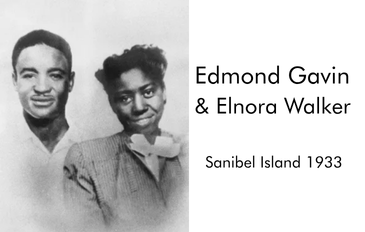
The Gavin and Walker families became connected through the marriage of Edmund Gavin and Elnora Walker, bringing together two important family histories.
Their contributions represent an essential part of Sanibel's development and provide a fuller understanding of the people whose work sustained island life through hurricanes, economic changes and generations of growth.
Their legacy is preserved through family accounts, historical photographs and community efforts to document Sanibel's Black history.
Preserving Sanibel's Pioneer History
Much of Sanibel's early history can still be explored through surviving buildings, family photographs, historical records and preserved landmarks.
The Sanibel Historical Museum and Village preserves structures associated with the island's earliest residents, including the historic schoolhouse, Rutland House, Burnap Cottage and buildings connected to early island commerce.
These buildings help illustrate how pioneer families lived, worked, educated their children and established businesses long before the construction of the Sanibel Causeway in 1963.
Sanibel's Heritage Trail also connects visitors with important historical locations and stories throughout the island.
Preserving these places and the personal accounts of pioneer families helps future generations understand the determination, ingenuity and community spirit that shaped Sanibel.
The island's history is not simply a collection of dates and buildings. It is the story of families who transformed an isolated barrier island into a community while adapting to its remarkable natural environment.
Frequently Asked Questions About Sanibel's Pioneer Families
When did homesteaders first settle Sanibel Island?
Permanent American settlement developed during the 1880s, particularly following the construction of the Sanibel Lighthouse in 1884 and the opening of land for homesteading in 1888.
How much land could Sanibel homesteaders claim?
Under the Homestead Act, eligible settlers could generally claim up to 160 acres of federal land if they fulfilled the required residency and land improvement conditions.
What did early Sanibel settlers grow?
Sanibel farmers cultivated tomatoes, peppers, eggplant, citrus, watermelons and other crops. Much of the produce was shipped to northern markets.
What happened to farming on Sanibel?
The hurricane of 1926 flooded agricultural fields with saltwater and devastated much of the island's farming economy. Many residents relocated or pursued fishing, hospitality and other occupations.
Which pioneer families helped shape Sanibel?
Families associated with Sanibel's early history include the Woodrings, Nutts, Rutlands, Reeds and Baileys. The Gavin and Walker families also made important contributions to the island's twentieth-century community.
Preserving Sanibel's History: David E. Carter and the Pfeifer Vintage Photo Collection
Special thanks to David E. Carter for his dedication to digitizing historic photographs for the Sanibel Public Library's Pfeifer Vintage Photo Collection.
Preserving these images was a community effort. Local families generously shared treasured photographs documenting Sanibel's pioneer families, historic homes, businesses and everyday island life. Many of these photographs were brought to Pfeifer Realty Group, where they were carefully scanned and returned to their owners.
Through David E. Carter's work and the generosity of participating families, these irreplaceable images became part of a lasting historical record, helping preserve Sanibel's heritage for future generations.
We also extend our appreciation to DigitalFGCU and the Florida Gulf Coast University Library for their contributions to preserving and providing access to Southwest Florida's history.
These photographs offer more than a glimpse into the past. They help tell the stories of the families who built Sanibel's earliest community and ensure that their legacy is not forgotten.
Where can visitors learn about Sanibel's pioneer history?
The Sanibel Historical Museum and Village preserves historic buildings and exhibits associated with the island's early residents. Additional historical sites can be explored along the Sanibel Heritage Trail.